
Ouray County Arrest Records and Charges
An arrest record usually starts with the law-enforcement side: the arresting agency, booking, offense information, incident or offense report, and jail custody trail if the person is held. In Ouray County, the Sheriff's Office is the local law-enforcement office for county records, while the official jail-information channel linked by the sheriff points to Montrose County Jail resources. The public Montrose inmate offense list can show booking number, name, statute, offense, court, offense code, and class.
The court charge record begins when the prosecutor files a formal accusation with the court. That record is different from a booking entry. One arrest can produce no filed charge, one filed charge, or several charges. Charges can be amended, reduced, dismissed, or resolved by plea or trial. The full case outcome belongs in the Ouray County criminal court records file, while jail custody and booking detail may require inmate or sheriff channels.
Find Ouray County Arrest Records
Use a channel sequence rather than one assumed database. For local arrest or offense records, contact the Ouray County Sheriff's Office or use the sheriff records request form and fee sheet. For custody information, use the Montrose County Jail resources linked from the Ouray sheriff page. For charges that have been filed in court, use the Colorado Judicial Branch docket search and then request copies from the Ouray Clerk of Court when needed.
- Check the sheriff or jail path for arrest, booking, custody, incident report, or offense-report information.
- Search the court docket for filed charges by name, case number, court type, case class, and date range.
- Read the charge list for statute, offense description, court, offense code, class, and current status when available.
- Contact the Ouray Clerk of Court for the charging document, court orders, disposition, or certified copies.
- Use statewide tools only for their proper role, such as DOC custody, CBI registry, or public defender office lookup.
The 7th Judicial District Attorney data dashboard gives district-level referral and outcome context for the six-county district that includes Ouray County.
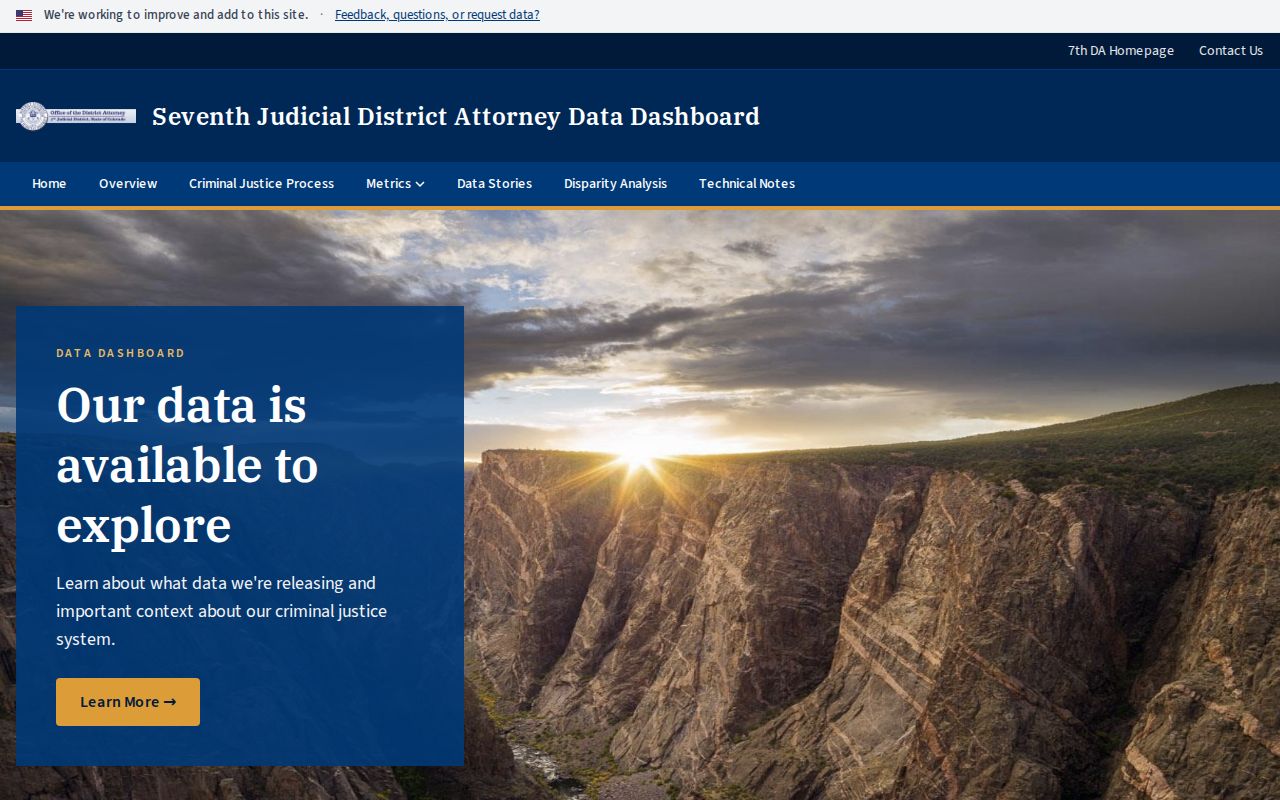
The dashboard is not a person-search tool, but it helps explain how referrals and outcomes are tracked at the district level.
Charges Filed After Arrest
After an arrest or investigation, the District Attorney decides what, if anything, to file. The 7th Judicial District Attorney serves Delta, Gunnison, Hinsdale, Montrose, Ouray, and San Miguel counties. The official DA site identifies Anna Cooling as District Attorney for the Seventh Judicial District, and the office publishes district-level data on referrals and outcomes. The prosecutor's filing decision is the bridge between the arrest record and the court charge record.
| Complaint | Information | Indictment | |
|---|---|---|---|
| Filed By | Often law enforcement or prosecutor, depending on the case path. | Prosecutor. | Grand jury. |
| Common Role | Starts many criminal cases or advisement paths. | Formal charging document for many felony prosecutions. | Formal charge returned by a grand jury in serious or special cases. |
| Record Effect | Creates charge language that can appear in the court file. | Sets formal accusations for court proceedings. | Starts or advances a prosecution through grand-jury action. |
Charging-document labels should not be read as final outcomes. A complaint or information may later be amended or dismissed. A person may be acquitted. A plea may resolve some charges while others are dropped. That is why the charge record and final disposition must be read together.
Ouray County Charge Status
Charge status describes where an accusation stands. The public docket or case file may show whether a charge is pending, amended, reduced, dismissed, or resolved. The Montrose inmate offense list can show statute, offense, court, offense code, and class, but the research warns that this roster data is not a final conviction record. For a court outcome, use the court file and disposition.
| Status | What It Means |
|---|---|
| Pending | The charge has not reached final disposition. |
| Amended | The charge wording, statute, severity, or count may have changed. |
| Reduced | The filed offense was lowered to a lesser charge or lower severity level. |
| Dismissed | The court or prosecution ended that charge without a conviction on it. |
| Deferred | The case may be held under conditions, with final result depending on compliance. |
| Sentenced | A conviction or plea has moved to punishment or court-ordered terms. |
Note: A booking offense, filed charge, and final conviction can be three different records.
Ouray County Charges vs Convictions
Charges after arrest are accusations. Convictions are final findings or guilty pleas. This difference matters for Ouray County arrest records because a person may appear in a booking or offense list before the prosecutor files anything, and a filed charge may later be dropped or changed. Do not treat an arrest, roster offense, or pending charge as proof of guilt.
| Charge | Conviction | |
|---|---|---|
| Stage | Filed after arrest, summons, or investigation. | Entered after guilty plea, verdict, or qualifying finding. |
| Proof | Accusation based on charging decision and probable cause. | Final court result under the criminal standard. |
| Status Changes | May be amended, reduced, dismissed, or deferred. | May be sentenced, appealed, sealed, or affected by deferred terms. |
| Best Source | Charging document, docket, and court case events. | Disposition and sentencing entries in the court file. |
Charge Codes and Offense Classes
Charge records often use statute numbers, short offense codes, and class labels. The research captured examples from the Montrose inmate offense list, such as statute numbers, offense text, court abbreviations, offense codes, and classes. Examples of offense-class labels included felony, misdemeanor, petty offense, parole, and other short codes. Those labels are useful for sorting the record, but they still need court context.
A criminal court case may include several separate counts from one arrest. Each count can have its own statute, severity level, plea, disposition, and sentence. A DUI-related entry, failure-to-appear entry, assault entry, or trespass entry should be read as a specific charge line rather than as a broad case summary. When the class or code is unclear, the clerk or the charging document is the better source.
- Charge
- An alleged offense filed after arrest or investigation.
- Statute
- The law cited as the basis for a charge.
- Disposition
- The final result of a case or charge.
- Sentence
- The punishment or conditions ordered after conviction.
Statewide Charge and Defense Channels
Statewide tools answer different questions than a local charge search. The Colorado DOC offender search is for sentenced offenders in state custody, not county jail booking or pending court charges. The CBI sex offender registry is for qualifying registrants, not all criminal cases. The public defender system serves financially eligible people charged with crimes in Colorado state court, and county-office assignment should be checked through the official office lookup.
The Colorado State Public Defender provides statewide defense representation for eligible defendants, while the public defender office lookup routes users by the county where the case is filed.
Defense-office lookup is useful after charges are filed, especially when the defendant needs appointed-counsel information.
Sealed Arrest Records and Charges
Colorado has specific sealing paths for arrest and criminal records. The research cites C.R.S. 24-72-703 through 24-72-710, including records other than convictions and conviction sealing categories. A person seeking to seal a record must identify the right path, gather case details, use the correct JDF forms, and list the agencies that should receive the order. Some offenses are not eligible, and some cases require waiting periods, prosecutor input, or a hearing.
| Sealed | Expunged | |
|---|---|---|
| Public Search | Hidden or restricted from ordinary public access after an order or qualifying process. | Removed or treated as unavailable under a specific law. |
| Common Fit | Colorado arrest, non-conviction, and eligible conviction records. | More limited, often tied to juvenile or special arrest contexts. |
| Ouray Filing Path | Usually the court that handled the case, through the Ouray Clerk of Court. | Only where a statute authorizes that remedy. |
Restricted Ouray County Charge Records
Arrest records and charge records can be restricted for several reasons. Juvenile records are controlled by the Children's Code and court access directives. Sealed criminal or arrest records may not appear in ordinary public searches. Active investigations, victim information, protected addresses, Social Security numbers, medical details, financial account numbers, and minor names may be withheld or redacted. Sheriff records also receive criminal-justice-records review, not just ordinary open-records treatment.
Ouray County administrative records may follow the county CORA process, but law-enforcement reports, booking materials, and many arrest-related records use sheriff or criminal-justice request channels. The sheriff standard records request fee in the research is $15 for 30 minutes of research plus up to five pages, with additional pages at $0.25 per page and a thumb drive fee for digital media. Current fees should still be confirmed with the official sheriff fee sheet before payment.
The Colorado Public Defender office lookup helps route defense questions for Ouray County charges to the correct regional office.
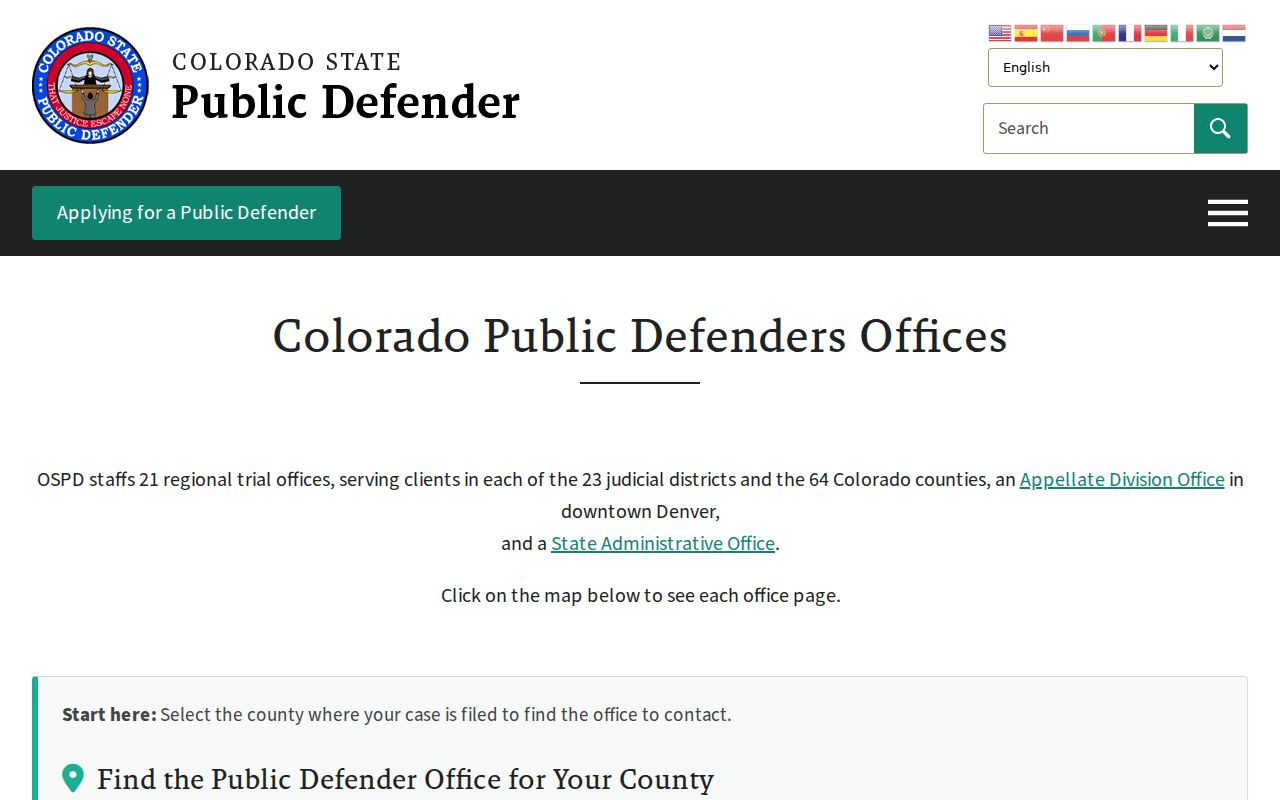
Public defender routing is separate from public record access, but it is a practical next step for people facing filed charges.